🚴 Road Cycling & Group Liability
- Drafting Risks: High speeds in pacelines increase the chance of chain-reaction crashes
- Negligence Standard: Establishing liability between cyclists in a group crash is legally difficult
- Auto Policy Hack: Auto Uninsured Motorist (UM) coverage can protect you if hit by a car
- Physical Damage Cover: Specialty collision insurance pays for carbon frame replacements.
Road cycling is a high-speed sport, especially during group rides, club pacelines, and training runs. While drafting and riding close to other cyclists reduces wind resistance, it increases the risk of serious collisions. If a cyclist in front of you touches wheels or brakes suddenly, it can trigger a pileup. Navigating who is legally liable for property damage and medical bills in these scenarios requires understanding negligence, comparative fault, and the interaction of auto and bicycle insurance policies.
1. Pacelines and Drafting: Who is Liable in a Crash?
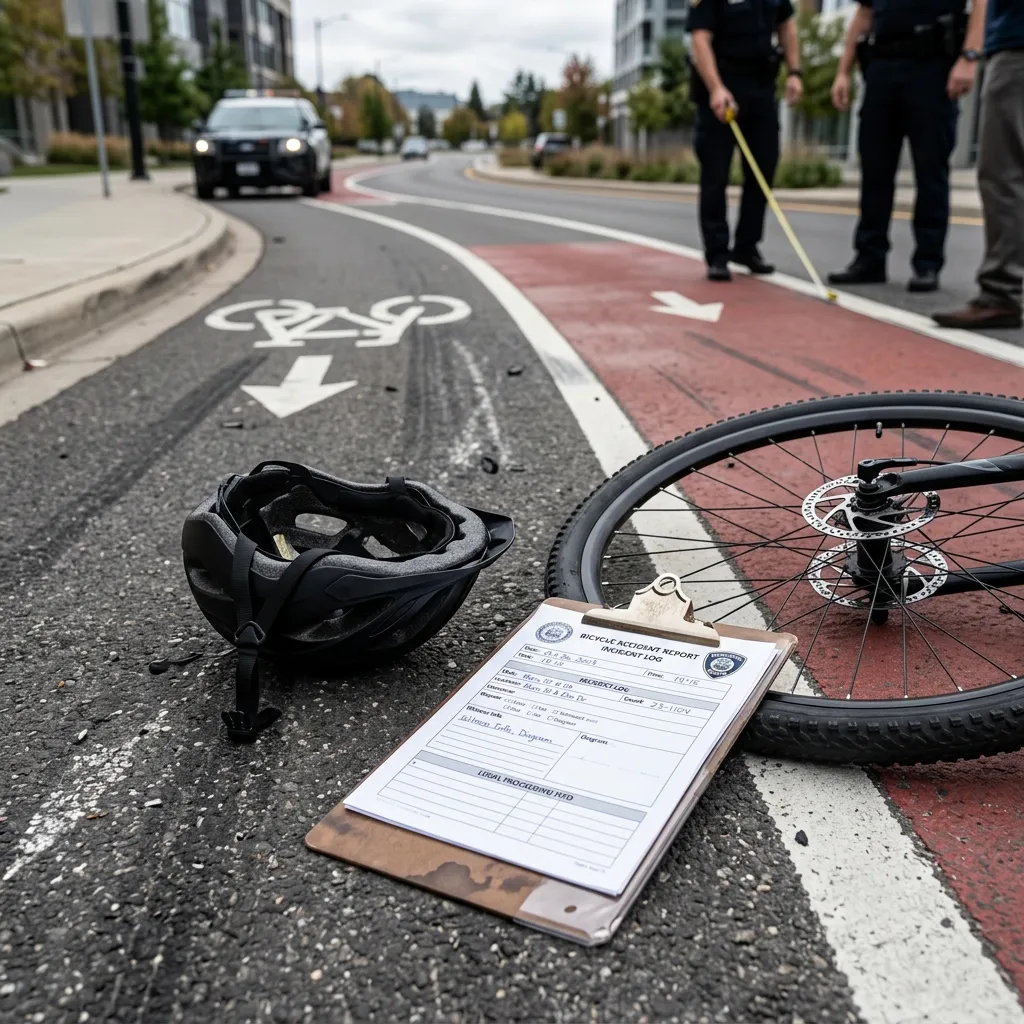
When a crash occurs on an informal group ride, determining liability is legally complex. In the US, cyclists participating in high-speed group rides are often considered to have "assumed the risk" of close-quarters riding. To hold another cyclist liable for your injuries or broken frame, you must prove they acted with **gross negligence** or intentional recklessness, rather than simple negligence (like failing to point out a pothole or shifting lanes suddenly).
For organized events like century rides, charity tours, or amateur races, participants are always required to sign liability waivers. While these waivers protect the event organizers and sponsors from lawsuits, they rarely shield individual riders from civil liability if one rider behaves recklessly. If a cyclist causes a crash by riding against the course direction or using illegal aerobars in a tight group, they can still be sued by injured participants.
There have also been legal cases where a lead rider was sued for failing to signal a major road hazard, like a deep drainage grate or gravel patch, resulting in severe crashes for the riders drafting behind them. While hard to prove, it highlights the safety and legal responsibilities present in tight cycling groups. Communication is not just a safety habit—it is a legal shield.
2. Carbon Fiber Inspection Protocol: Structural Scanning
Unlike metal frames, carbon fiber does not bend or dent when it takes an impact; instead, it can develop micro-cracks or internal layer separation (delamination) that is completely invisible to the naked eye. Riding on a delaminated carbon frame is highly dangerous, as it can fail catastrophically and without warning at high speeds. After any significant crash on a road bike, standard insurance companies might refuse to replace the frame if there are no visible cracks. However, specialty cycling insurance policies cover the cost of **ultrasound or thermographic frame scans** (typically costing $300 to $500). If the scan reveals internal damage, the insurer will pay for a complete frame replacement, ensuring you are never forced to ride on a compromised chassis.
3. Specialty Cycling Collision Coverage
Because carbon fiber frames and lightweight components are highly fragile, even a minor drop can crack a frame and make it unsafe to ride. Standard health insurance covers your medical bills, but it won't replace your $6,000 racing rig. Specialty cycling collision coverage pays to repair or replace your bicycle, components, and even your helmet and cycling apparel if you crash, regardless of who was at fault in the group. This allows you to repair your gear immediately without waiting for a lengthy legal fault determination.

4. Underinsured Motorist (UM/UIM) Coverage: A Cyclist's Best Protection
While crashes with other cyclists are common, the most dangerous collisions are with motor vehicles. If a car hits you, the driver's bodily injury liability insurance should cover your medical bills. However, many drivers carry only the state-minimum liability limits (which can be as low as $15,000 or $25,000), or they may flee the scene (hit-and-run).
To protect yourself, you can leverage a critical auto insurance feature: **Uninsured/Underinsured Motorist (UM/UIM) Coverage**. In almost every US state, if you have UM/UIM coverage on your personal auto policy, it will cover you if you are hit by a car while riding your bicycle. Because bicycle injuries are often severe, carrying high UM/UIM limits (such as $250,000 or $500,000) on your auto policy is one of the most effective ways to secure financial protection on the road.
To ensure this coverage applies, review your auto policy's definition of an "insured person" and "insured vehicle." Most major carriers define UM/UIM to cover the policyholder as a pedestrian or cyclist when struck by an uninsured motor vehicle. Make sure this coverage is not specifically restricted to collisions inside your car. In some states, "contact" rules require physical contact with the car to trigger UM, which is an important nuance to verify with your agent. If a car cuts you off, causing you to crash, but the car does not physically touch you, some states will deny the UM claim unless you have an independent witness to verify the "phantom vehicle's" actions.
Frequently Asked Questions
Does specialty bicycle insurance pay if I cause a crash?
Yes. If you cause a crash that injures another cyclist or pedestrian, the personal liability section of a specialty bicycle insurance policy will cover their medical bills and property damage up to your policy limit, as well as your legal defense fees.
What is a medical payments (MedPay) rider?
A MedPay rider on a bicycle insurance policy pays for immediate out-of-pocket medical costs—such as your health insurance deductibles, co-pays, or ambulance fees—regardless of who caused the accident, providing quick financial relief after a crash.