🚲 Bicycle Collisions: Insurance & Negligence
- Road Rules: Bicycles are classified as vehicles and must follow traffic signals
- Fault Basics: Determined by negligence (dooring, failure to yield, unsafe passing)
- Comparative Fault: Damages are reduced if the cyclist shares fault
- Insurance Policy: Auto liability and PIP coverage apply to cyclist accidents.
Collisions between motor vehicles and bicycles can lead to catastrophic physical injuries. When these accidents happen, one of the most critical and complex questions is: who is legally liable, and which insurance policies cover the medical bills? Because bicycles share the road with much larger, heavier vehicles, traffic laws and negligence principles govern these situations. This guide explains how fault is determined in bicycle accident cases and how insurance coverage works.
1. The Legal Status of Bicycles
Under the traffic laws of almost every US state, a bicycle is legally classified as a "vehicle." This means that cyclists have the same rights and responsibilities as motorists. Cyclists must obey stop signs, traffic lights, lane markings, and yield rules. Conversely, motorists must respect a cyclist's right to share the roadway and provide them with safe clearance.
Because of this shared status, a cyclist who runs a red light and gets hit by a car can be held partially or fully at fault for the accident. Adhering to local vehicle codes is not only a matter of road safety, but also key to protecting your financial and legal interests in an insurance claim.
2. Rules of the Road: Right-of-Way at Intersections
Intersection collisions represent the majority of car-bike accidents. The two most common scenarios are:
- The Right Hook: A motorist overtakes a cyclist on the left and then turns right directly across the cyclist's path at an intersection or driveway. Motorists have a duty to yield to cyclists travelling straight in a bike lane before executing a turn.
- The Left Cross: An oncoming motorist turns left across the cyclist's lane of travel, failing to yield right-of-way. Motorists often misjudge the speed of oncoming bicycles, especially e-bikes, resulting in T-bone collisions.
Establishing who entered the intersection first and had the green light is critical. Telemetry files from bike computers and GPS data can serve as legal proof of speed and position prior to the crash.
3. Negligence: The Basis of Liability
To succeed in a legal claim after a bicycle accident, you must prove that the other party was "negligent." Negligence means failing to exercise reasonable care under the circumstances. Examples of driver negligence include:
- Failing to look for cyclists before making a turn (especially right turns, causing a "right hook" crash).
- Opening a car door into the path of an oncoming cyclist (known as "dooring").
- Distracted driving (texting), speeding, or driving under the influence.
- Passing a cyclist too closely (many states require a minimum of 3 feet of clearance).
Cyclists can also file "road defect claims" against municipalities or state Departments of Transportation (DOT). If a crash is caused by a deep pothole, parallel sewer grates that trap tires, or construction debris in a designated bike lane, the government entity responsible for maintaining the road may be held liable, provided they had prior notice of the hazard. However, suing a city involves strict notice timelines (often as short as 30 to 90 days) and sovereign immunity caps, requiring immediate assistance from a legal professional.
Furthermore, over 30 states have enacted **Vulnerable Road User (VRU)** laws. These statutes impose stricter criminal penalties and civil liability on motorists who strike or seriously injure cyclists, pedestrians, or road workers, giving cyclists stronger leverage during insurance settlement negotiations.
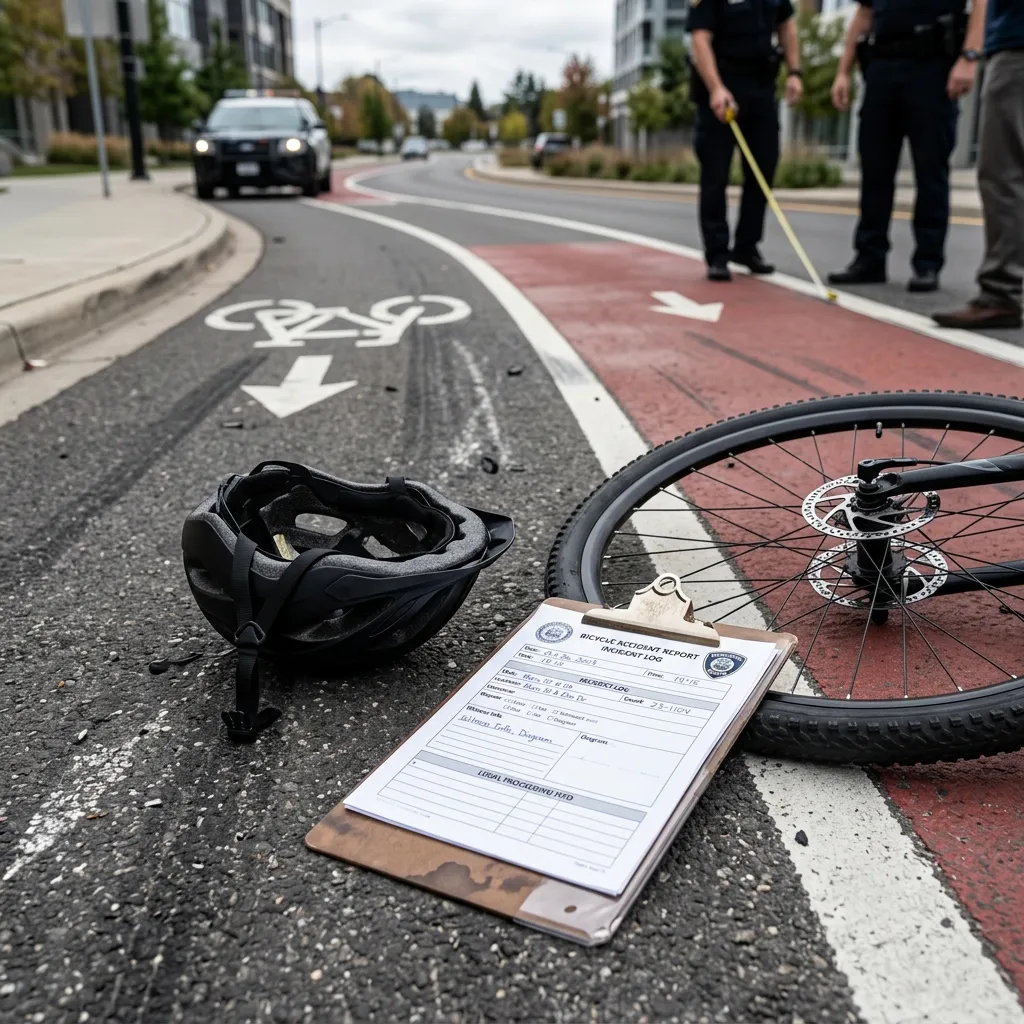
"Dooring is one of the most common causes of bicycle accidents in urban areas. In most jurisdictions, the occupant of the vehicle who opened the door is automatically presumed to be at fault, and their auto liability insurance covers the cyclist's damages."
4. Comparative Negligence & Insurance Payouts
In many accidents, both the motorist and the cyclist share some degree of fault. For example, if a car turns left in front of an oncoming cyclist, but the cyclist was riding against traffic or at night without lights, both parties contributed to the crash. How this affects compensation depends on your state's laws:
- Comparative Negligence: Most states use this system. Your financial recovery is reduced by your percentage of fault. If you suffered $100,000 in damages but are found 20% at fault, you can recover $80,000. In modified comparative states, you cannot recover anything if your fault exceeds 50%.
- Contributory Negligence: A handful of states (such as MD, NC, VA, and AL) follow this strict rule. If a cyclist is even 1% at fault, they are completely barred from recovering any damages from the motorist.
Additionally, riding at night without the legally required lights or reflectors can be considered "negligence per se" in contributory negligence states, meaning the insurance company can escape paying the claim completely, regardless of how recklessly the driver behaved.
Frequently Asked Questions
Does auto insurance cover bicycle accidents?
Yes. If a motorist hits you, their bodily injury liability insurance covers your medical bills and property damage. Additionally, if you have auto insurance, your own Personal Injury Protection (PIP) or Uninsured/Underinsured Motorist (UM/UIM) coverage may apply to your bicycle accident.
What should I do immediately after a bicycle accident?
Call the police to file an official report, gather witness contact details, take photos of your bicycle, the vehicle, and the scene, and seek medical attention immediately. Keep your damaged bicycle and gear—do not attempt to repair or clean them, as they serve as crucial evidence for the insurance adjuster.