🚲 Bicycle Safety: Legal & Insurance Rules
- Ride Direction: Always ride in the same direction as traffic (never against it)
- Night Visibility: White front light and red rear light/reflector required
- Helmet Laws: Varies by state; primarily affects minors under 16/18
- Liability Impact: Violating safety laws can void or reduce your insurance payouts.
Whether you ride a bike for fitness, environmental reasons, or daily transport, staying safe and legal is paramount. Bicycle safety is governed by a combination of state traffic laws and local municipal codes. Understanding these rules protects you from traffic citations, reduces the risk of serious collisions, and safeguards your insurance claims. This article outlines the essential equipment and road rules every cyclist should follow.
1. Mandatory Safety Equipment
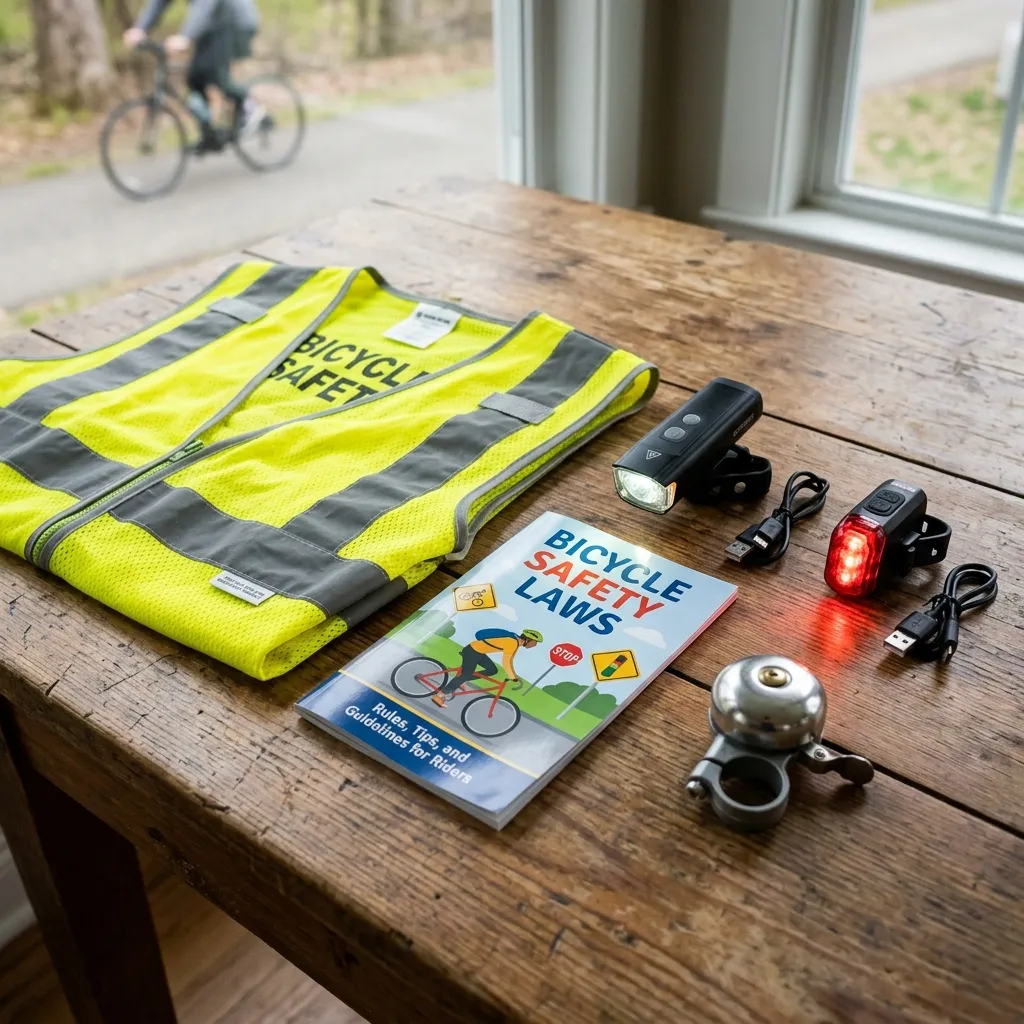
Most states mandate specific equipment to ensure you are visible and capable of stopping safely:
- Lights and Reflectors: When riding after sunset or before sunrise, almost all states require a white light on the front visible from at least 500 feet and a red reflector or light on the rear. Flashing modes are highly recommended in dense urban areas but must comply with local brightness limits.
- Brakes: Your bicycle must be equipped with a braking system that allows you to make a clean, dry, one-wheeled skid on clean pavement. Fixed-gear bikes without handbrakes are illegal in several states unless they meet specific skid-stopping distances.
- Bells and Horns: Some jurisdictions (like New York and Oregon) require a bell or audible warning device to alert pedestrians and other cyclists when passing.
2. Lane Positioning Laws: "As Far Right as Practicable"
Most US states require cyclists to ride "as far right as practicable" when travelling slower than the normal speed of traffic. However, the legal definition of "practicable" is often misunderstood by motorists and law enforcement alike. Under Uniform Vehicle Code (UVC 11-1205), a cyclist is **legally permitted to take the center of the lane** under several critical safety exceptions:
- When overtaking and passing another vehicle or bicycle proceeding in the same direction.
- When preparing for a left turn at an intersection or into a private road or driveway.
- When reasonably necessary to avoid unsafe road conditions, including fixed or moving objects, parked vehicles, pedestrians, animals, surface hazards, or wet lane configurations.
- When the travel lane is "too narrow for a bicycle and a vehicle to travel safely side-by-side." In lanes narrower than 14 feet, taking the lane prevents drivers from attempting dangerous squeezes within the same lane.
3. Three-Foot Passing Laws & Negligence Per Se
Over 30 states have enacted statutes requiring motorists to maintain a minimum safety distance—typically **three feet**—when overtaking and passing a cyclist from behind. Some states (like California) require drivers to change lanes completely if a secondary lane is available. In civil injury lawsuits, a driver who strikes a cyclist while attempting to pass with less than three feet of clearance is often found to have committed **negligence per se**. This means the driver is automatically presumed negligent because they violated a safety statute, shifting the burden of proof to the driver to defend their actions, significantly speeding up the injury claim process.
4. Rules of the Road & Liability Implications
Since bicycles are vehicles, cyclists are subject to standard traffic rules. Key rules to remember include:
- Riding with Traffic: You must always ride in the same direction as traffic. Riding against traffic ("salmoning") is highly dangerous, illegal, and is a leading cause of head-on and intersection collisions.
- Using Bike Lanes: In states where bike lanes are available, you are generally required to use them unless you are preparing to turn, avoiding debris, passing another vehicle, or travelling at the speed of traffic.
- Hand Signals: You should use standard hand signals to indicate left turns, right turns, and stopping to warn motorists behind you.
Familiarizing yourself with "dooring laws" is also crucial. Dooring occurs when a driver opens their car door into a cyclist's path. In states that have dooring regulations, the driver or passenger is civilly and criminally liable. To avoid this risk, cyclists are encouraged to ride at least three feet away from parked cars, and drivers should use the **Dutch Reach** (opening the car door with the far hand, forcing them to look back for oncoming bikes).
"Riding on sidewalks is illegal in most commercial zones due to the danger it poses to pedestrians and the lack of visibility to drivers turning at intersections. If you hit a pedestrian on a sidewalk, your homeowners or renters liability insurance might pay the claim, but you could face citations and premium hikes."
5. The Helmet Defense in Insurance Claims
Even in states where helmet use is not legally mandated for adults, failure to wear a helmet can impact your insurance payout under the "comparative fault" defense. Insurance company lawyers frequently argue that a cyclist's head injuries would have been avoided or less severe if they had been wearing a helmet. If the jury accepts this argument, your overall compensation can be reduced significantly. Wearing a helmet is therefore not only a critical physical safety measure, but also a vital legal protection.
Frequently Asked Questions
Am I legally required to wear a helmet?
There is no federal helmet law in the United States. Many states and municipalities require helmets for riders under a certain age (typically under 16 or 18). Currently, no state requires adult cyclists to wear helmets, though it is highly recommended for safety and to counter defense claims of failure to mitigate injury.
Can I get a DUI on a bicycle?
Yes, in many states. Because a bicycle is considered a vehicle, operating one under the influence of drugs or alcohol can lead to a DUI citation, resulting in fines or driver's license suspensions depending on local laws.